Moss vs. Algae: What Washington Homeowners Should Know
Moss vs. Algae: What Washington Homeowners Should Know (And Why It Matters for Your Roof)
Here in the Pacific Northwest, roofs deal with constant moisture, shade, and organic debris — the perfect environment for unwanted growth. But many homeowners don’t realize there’s a big difference between moss and algae on a roof.
They may look similar from the street, but the impact they have on your home (and your warranty) is completely different. Understanding the difference helps you protect your home and make the best decision when it’s time for roof cleaning, maintenance, or replacement.
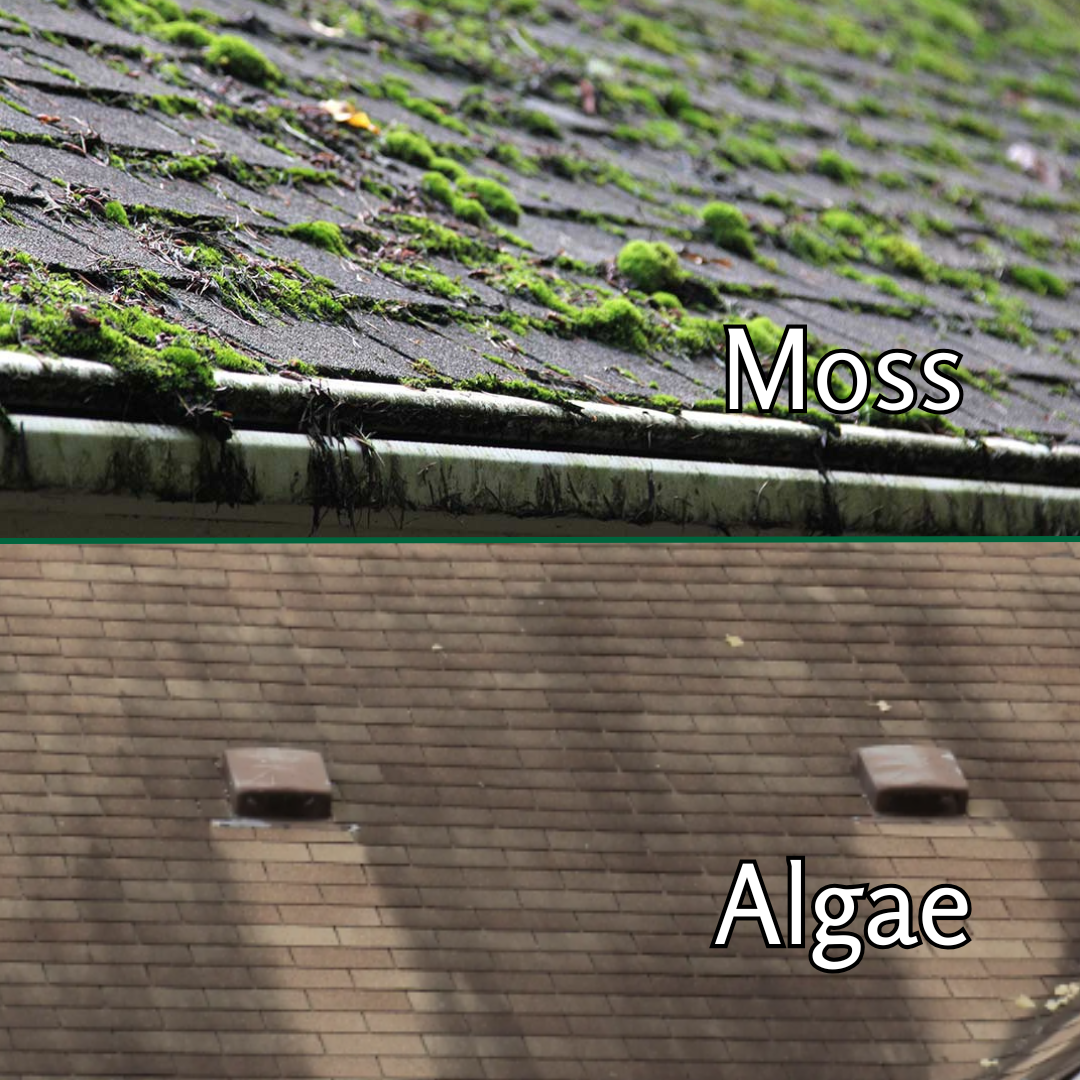
Moss: The Green, Fuzzy Growth That Damages Roofs
Moss is a plant.
It has leaves, stems, and tiny root-like structures that anchor into your shingles.
Why moss is dangerous
Moss can:
- Lift shingles as it grows
- Trap large amounts of moisture
- Accelerate shingle deterioration
- Promote rot in plywood and roof decking
- Lead to leaks and structural damage
- Cause insurance companies to require a roof replacement
Once moss takes hold, it grows quickly. Even a small patch can spread across an entire roof in a few seasons.
Important:
Moss is NOT covered by any manufacturer warranty.
It’s considered an environmental condition — preventable with maintenance and cleaning.
Algae: The Black Streaks Found on Many Older Roofs
What most homeowners assume is “mold” is actually algae.
Specifically, a species called Gloeocapsa magma — a blue-green algae that shows up as black streaks.
Unlike moss, algae is cosmetic, not structural.
What algae does:
- Causes dark streaks and discoloration
- Makes the roof look older than it is
- Does not rot plywood or lift shingles
And here’s the good news:
GAF DOES warranty algae growth on many of their shingles, including the GAF Timberline HDZ line with StainGuard Plus™ Algae Protection.
This is a huge advantage for Washington homeowners.
Why Moss Often Requires Full Roof Replacement
Because moss traps moisture and breaks down shingles, it commonly causes:
- Soft plywood
- Rotting roof decking
- Mold in attic spaces
- Shingle failure
- Insurance cancellation or required replacement
When moss reaches a certain point, cleaning won’t solve the underlying damage. Many homeowners we meet don’t realize hidden rot exists until we remove shingles during replacement.
This is why insurance companies frequently flag heavy moss as a condition that must be resolved immediately.
Why We Recommend GAF Timberline HDZ With StainGuard Plus™
To prevent algae streaks and keep roofs looking newer longer, we recommend GAF Timberline HDZ shingles, which include:
- StainGuard Plus™ Technology
- Algae-resistant granules
- Long-term protection from streaking
- Industry-leading warranty coverage
This means homeowners don’t have to worry about the black streaks that often appear on Washington roofs.
What Team Roofing NW Does When Moss or Algae Is Found
When we evaluate your roof, we will:
- Identify whether you’re dealing with moss, algae, or both
- Check for hidden moisture or plywood damage
- Take photos to show you exactly what’s happening
- Explain your replacement options clearly
- Recommend a roofing system that prevents future issues
We never push unnecessary replacements — but we also don’t want you to invest in cleaning a roof that is already failing beneath the surface.
Serving Homeowners Across the Puget Sound
We help homeowners throughout:
- Kent
- Tacoma
- Puyallup
- Renton
- Bonney Lake
- Auburn
- Seattle
- Olympia
- Whidbey Island
And anywhere in between.
Worried About Moss or Black Streaks on Your Roof? Let’s Take a Look.
Whether it’s moss damage, algae streaking, or general wear and tear, Team Roofing NW is here to help you make informed, confident decisions.
📞 Call or text Team Roofing NW for a free roof inspection.
We’ll give you honest recommendations — and show you exactly what’s happening on your roof
Jean Paul Seward
Owner, Team Roofing NW
Jean Paul Seward is the founder and owner of Team Roofing NW, a family-owned roofing and exterior company established in 2020 and based in Kent, Washington. With a background that started in hands-on construction building windows, Jean expanded his expertise into siding and roofing, developing a well-rounded understanding of home exteriors.
He is a certified professional through GAF Master Elite, Polyglass/Brava, and the James Hardie Alliance, and works with trusted brands like GAF, Brava, and James Hardie to deliver reliable, long-lasting results.
Jean built Team Roofing NW with a focus on honest pricing, efficient operations, and high-quality workmanship without unnecessary overhead. His approach centers on educating homeowners, providing clear options, and delivering real value on every project.